TrustMark registered building firm in Bristol offering loft conversions.
TrustMark
Bristol · 4.7 miRegistered company, not yet verified
PhoneNo phone number yet: see their profile

Builders in Bristol spend much of their time on tall Victorian terraces, hillside gardens and conservation areas. This page covers what that means for extensions, loft conversions and renovations, which council rules to check first, and what to ask before you hire.
If you are looking for builders in Bristol, the first thing to know is that most of the work is on older, taller, tightly packed houses, and many of those sit on hills or inside a conservation area. That shapes what you can build, how long permissions take and which builders are worth asking. Whether you want an extension, a loft conversion or a full renovation, a builder who has already worked on streets like yours will spot the problems early.
Bristol has a lot of older terraced housing. In the 2021 Census, 61,440 of the city's 191,638 households lived in a terraced house, about 32% (Office for National Statistics, Census 2021, table TS044). Another 19,494 households, roughly one in ten, lived in part of a converted or shared house. Purpose-built flats account for 42,039 households. Detached houses are a small minority at 11,550.
The age of the stock points the same way. The Valuation Office Agency's Council Tax stock figures for 31 March 2025 count 44,010 Bristol homes built between 1900 and 1918, about 21% of the city's 212,810 dwellings, and a further 20,440 built before 1900. Together that is about three in ten homes built before 1919.
For a homeowner this matters in three practical ways:
Bristol is steep. Streets in Clifton, Cotham, Totterdown, Hotwells and Bedminster climb and drop in ways that change the job. A terrace may have its front door at street level and a rear garden well below, or the other way round. A rear extension on sloping ground can need extra foundations or retaining work, and your plans need accurate levels, because the height of an extension is measured from the ground next to it.
Access is another factor. Narrow streets, resident parking and steps up to front doors make skips, scaffolding and deliveries harder. If a skip or scaffold has to stand on the public highway, the council can require a licence, so ask your builder who applies and who pays. This is a good question to put to every firm on your shortlist, because a team that has worked nearby will answer without hesitating.
Rear and side-return extensions. Victorian terraces often have a narrow back addition and a small yard beside it. Filling that side return is one of the most common ways to widen a kitchen. Look at extension builders in Bristol with this kind of layout in mind and ask for photos of finished jobs on similar houses.
Loft conversions. For a loft conversion in Bristol, a rear dormer is the usual approach on a terrace. Under permitted development in England, the Planning Portal says roof enlargements are limited to 40 cubic metres for terraced houses and 50 cubic metres otherwise, counting any earlier enlargement (Planning Portal). These rights do not apply to flats or to houses in a conservation area. See our loft conversion cost guide for prices from published sources.
Renovation of period houses. Rewiring, damp work, replacing lost features and re-roofing are everyday jobs. Ask whether the builder has handled lime plaster and repointing, since modern cement can trap moisture in old walls.
Basements, retaining walls and garden structures. On hillside plots these are structural jobs. Insist on an engineer's design, not just a builder's say-so.
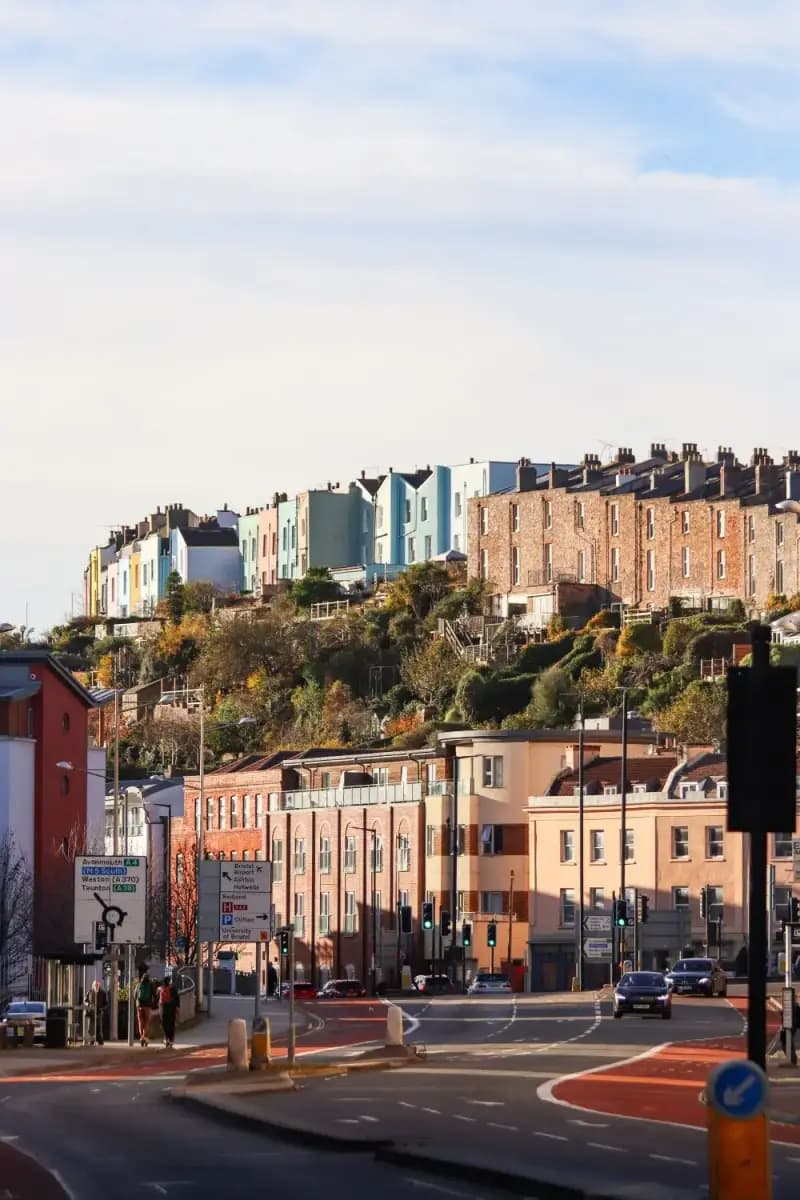
Bristol City Council says there are 33 conservation areas in the city, with stricter planning controls than elsewhere (Bristol City Council). In England, GOV.UK's householder technical guidance says that in a conservation area (Article 2(3) land) roof extensions are not permitted development, side extensions are not permitted development and only one storey can extend beyond the rear wall (GOV.UK, page last updated September 2019, so check current legislation). In practice, a loft conversion with a dormer in a conservation area normally needs a planning application.
On top of that, the council has Article 4 directions that remove some permitted development rights locally. Its own list includes boundary walls and hard standings in the Cotham and Redland conservation area, works that change the external appearance of properties on named streets in Clifton Village, and enclosures at Henleaze. It also lists several areas where turning a house into a small house in multiple occupation needs planning permission, with more areas due from 1 January 2027 (Bristol City Council, Article 4 directions). Check your address on the council's map before you pay for drawings.
If your house is listed, you may need listed building consent even for work that would otherwise be permitted, and that is a separate application.
For an extension, the usual first question is whether you need planning permission at all. Our guide to planning permission for a house extension explains the rules. For a house outside a conservation area, GOV.UK's guidance says a single-storey rear extension can extend 3 metres beyond the rear wall (4 metres if detached), with a larger neighbour-consultation route of 6 or 8 metres that is not available on conservation land.
Flats and maisonettes have no householder permitted development rights, so most external alterations need an application. Many of Bristol's converted houses fall here.
Building regulations are separate from planning. Bristol City Council's building regulations service offers full plans applications, building notices and regularisation applications. Loft conversions, structural openings and most extensions need approval, and your builder should tell you which route they are using and who will inspect the work. For demolition, the council asks for at least six weeks' notice.
The council's own pages are the place to start:
Building is not a licensed trade in the UK, so the checks are yours to make. Our guide on how to hire a builder covers the basics: written fixed-price quote, insurance, staged payments and a proper contract. For Bristol specifically, add these:
MyLocalBuilders.uk helps you find local builders in Bristol. It ranks firms by verified reviews from the last 12 months, then by distance, and nobody pays to move up the list. A labelled Featured slot sits above it. An enquiry goes to one builder only. Bristol listings are still being built up, so search for a builder near you to see who is currently listed.
Updated . Photo at the top: Paul Underwood on Unsplash (Unsplash Licence).
Often not if you live in a house outside a conservation area and stay within the permitted development limits (40 cubic metres for a terrace, 50 otherwise). Flats and houses in conservation areas need a planning application, and building regulations approval is needed either way.
Bristol City Council says there are 33. Extra planning controls apply in them, so check your address with the council before you plan work.
Yes. The council lists several, covering things like boundary walls and hard standings in Cotham and Redland and changes of use to small HMOs in parts of the city. Check the council's Article 4 page for your address.
They can, because sloping plots may need deeper foundations, retaining walls or harder access for skips and deliveries. Ask each builder to price these points separately in a written quote.
Bristol City Council's building control team handles applications and inspections, and your builder should tell you which route they are using. Ask for the completion certificate at the end.
Ask neighbours with similar houses, then shortlist and compare written quotes. You can also search this directory, which ranks builders by verified reviews from the last 12 months, then by distance.
General information, not legal or professional advice. Rules differ between England, Scotland, Wales and Northern Ireland, and each council applies them in its own way.