
Groundworkers and groundwork contractors
Groundworks are the part of a build nobody sees once it is finished and everybody pays for if it goes wrong. Here is what groundworkers do, which rules apply, and what to check before you hire.
On this page
Want a price for your project?
Tell us what you need. We reply by email within 1 working day. Free, and nothing is shared without asking you.
In numbers
- within 3 metresExcavation near a neighbour's building: distance at which notice can be needed (deeper than their foundations)GOV.UK booklet published 12 May 2016, read 12 October 2026. GOV.UK
- within 6 metresExcavation near a neighbour's building: further distance for notice (45 degree line from their foundations)GOV.UK booklet published 12 May 2016, read 12 October 2026. GOV.UK
- at least one monthNotice before planned start of the excavationGOV.UK booklet published 12 May 2016, read 12 October 2026. GOV.UK
- 14 daysNeighbour's response window for a consent to the worksGOV.UK booklet published 12 May 2016, read 12 October 2026. GOV.UK
- 2015 editionEdition of Approved Document H (drainage, England)read 12 October 2026. GOV.UK
- An offenceStarting work that needs a building warrant without one (Scotland)mygov.scot, read 12 October 2026. mygov.scot
- 25%Largest deposit Citizens Advice advises agreeing toread 12 October 2026. Citizens Advice
- 14 daysTime to cancel a contract if you change your mind (where it applies)read 12 October 2026. Citizens Advice
Groundworks are everything that happens between a bare plot and the first course of bricks: setting out, digging, foundations, drains, services and the ground the building stands on. They are priced from what is under the surface, which nobody can fully see in advance, so the quote you want is one that says clearly what is assumed and what happens if the ground is different. Below this page you will find groundworkers near you.
What do groundworkers do?
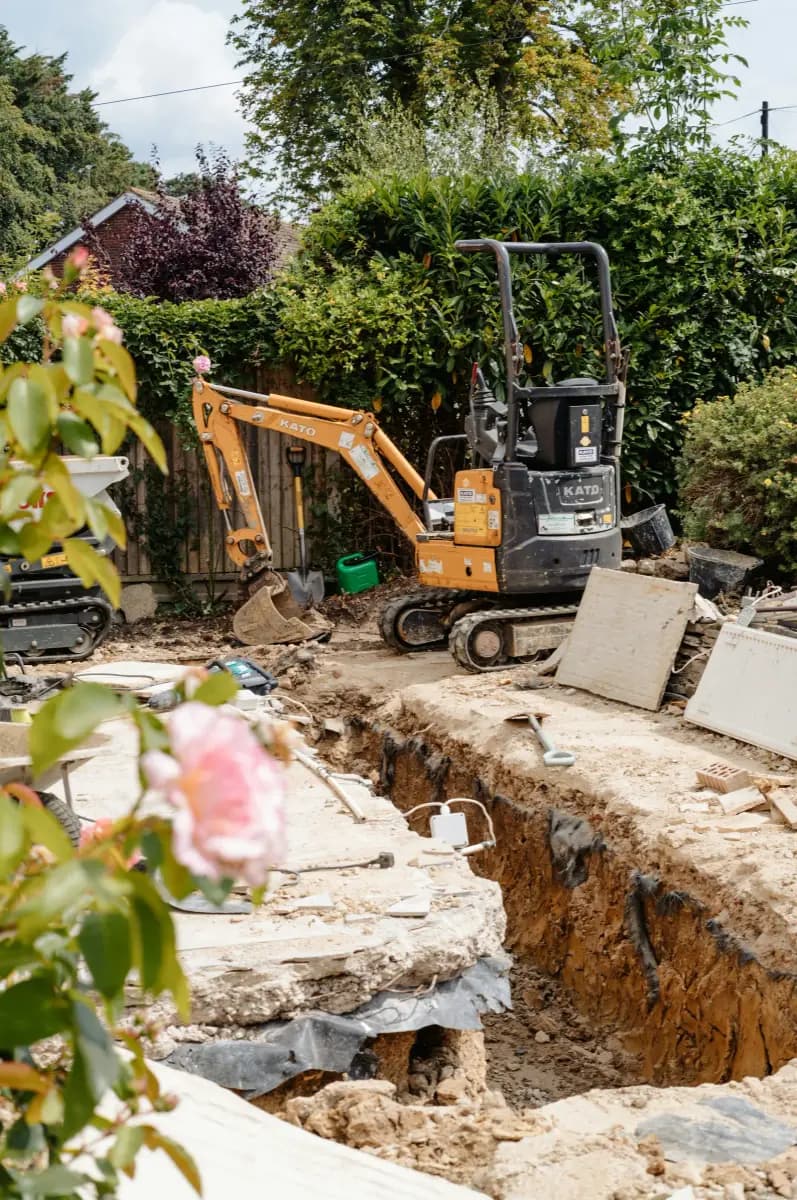
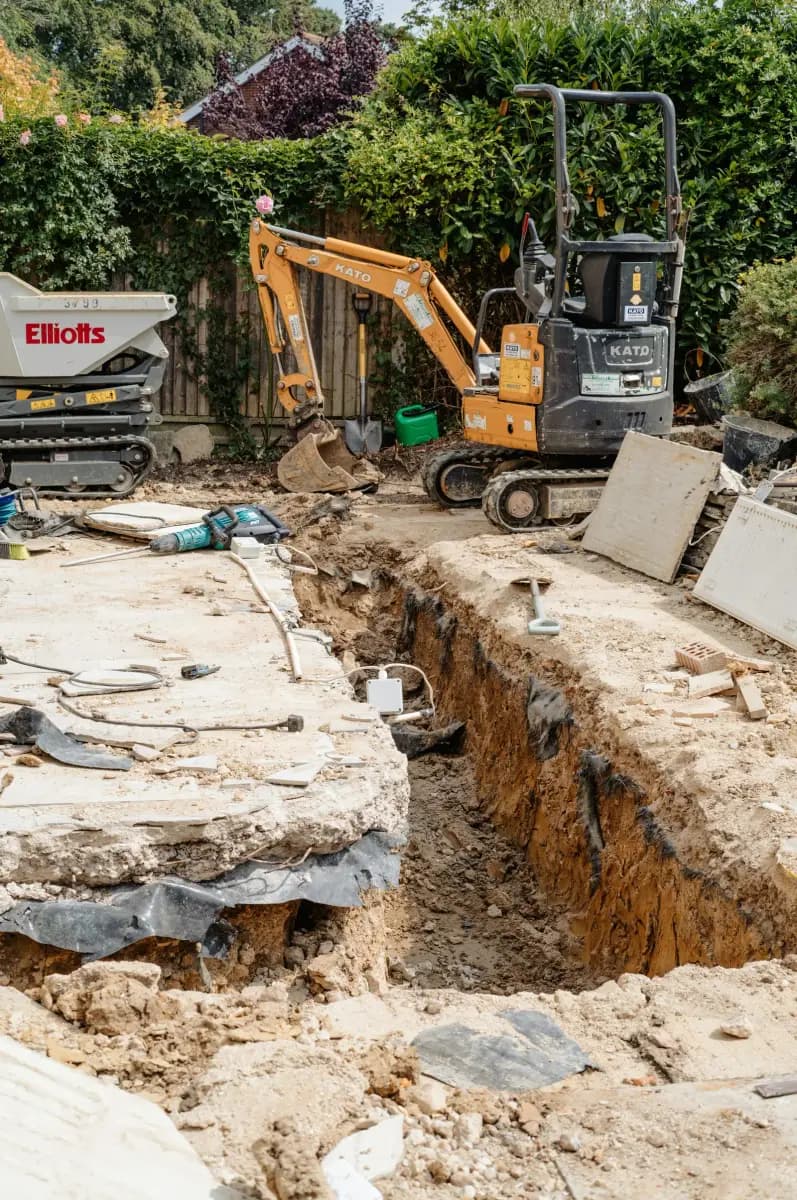
Site clearance and excavation. Stripping turf and topsoil, digging out for foundations, trenches and basements, and moving the spoil. The spoil has to go somewhere, and who takes it away is a question for the quote.
Foundations. Trench-fill or strip foundations, pad foundations, piles and rafts, depending on the soil, the trees nearby and the load. The foundation design should come from your architect, engineer or building control, not from the digger driver's hunch.
Drainage. Foul and surface water pipes, manholes, inspection chambers, soakaways and connections to the public sewer. Drainage is the part of groundworks that most often goes wrong in ways you cannot see until it fails.
Services. Trenches and ducts for water, gas, electric and telecoms. The connection to the network itself is normally done by the utility or its approved contractor.
Bases and hardstanding. Concrete slabs, sub-bases for patios, driveways and garden rooms, and retaining walls. For surfaces and driveways in particular, see driveways and patios.
Working with other trades. On an extension, the groundworker often goes in first and the bricklayers follow. See extensions and structural work.
What rules apply to groundworks?
The Party Wall etc. Act 1996
If you dig near a neighbour's building, the Party Wall etc. Act may apply. The GOV.UK explanatory booklet says notice is needed where you plan to excavate within 3 metres of any part of a neighbouring owner's building or structure, where the work will go deeper than the neighbour's foundations. It also applies within 6 metres where the work meets a line drawn downwards at 45 degrees from the bottom of the neighbour's foundations. The notice has to go at least one month before the planned start, include plans and sections showing the location and depth of the excavation, and say whether you propose to strengthen or safeguard the foundations (GOV.UK, Party Wall etc. Act 1996 explanatory booklet, read 12 October 2026). The booklet applies in England and Wales, and the notice is the owner's responsibility, not the groundworker's, so ask your builder or surveyor who is serving it.
Drainage and Part H
In England, drainage is covered by Approved Document H. GOV.UK lists the 2015 edition, covering foul water drainage above and below ground, pipe sizes, pipe protection, manholes and inspection chambers (GOV.UK, Approved Document H, read 12 October 2026). If you build over or close to a public sewer, the water company can have its own requirements, so ask whether any agreement is needed before work starts. Your council's building control team will say how it wants to inspect trenches and drains, and the groundworker should be told when to call for inspections before concrete is poured or trenches backfilled.
Planning and building control
Most groundworks are part of something else, such as an extension, a garden building or a driveway, and it is that project that carries the planning or building control requirement. For the planning side of an extension, see our guide to planning permission for a house extension, and for the building regulations side see building regulations for home improvements. Groundwork on its own, such as a new drain run, may still need approval, so ask your council.
Wales and Scotland
Wales has its own building regulations, so confirm the Welsh position with your council. In Scotland, the Scottish Government says you need a building warrant before starting work that requires one, and that it is an offence to start without one (mygov.scot, building warrant, read 12 October 2026). The page lists extending your home among the work that needs a warrant, and that is where most foundation work begins.
How long do groundworks take?
It depends on the size of the plot, the type of foundation, the soil, the weather and the sequence with the other trades. A small garden building base can be a few days, and a house extension's groundworks are more likely to take weeks. Ask for the programme in writing, including how many days are for excavation, when inspections are expected and what happens when it rains. Wet weather can stop a dig or turn a trench into a pond, and a contractor with a plan for that is the one to choose.
What should you check before hiring a groundworker?
| Check | What to ask for |
|---|---|
| Scope | A written description of excavation, depths, foundations, drainage, backfill, concrete and spoil removal |
| Ground conditions | What the price assumes about soil, water and obstructions, and how unexpected ground will be priced |
| Buried services | How they locate pipes and cables before digging, and what they do if they find one |
| Spoil and waste | Who removes it, where it goes, and whether the carrier is registered |
| Inspections | Who calls building control and when, and whether work stops until an inspector has seen it |
| Insurance | Public liability cover and its end date |
| Plant | Whether machines and drivers are the firm's own or hired in, and who is responsible for damage |
| Examples | Two or three recent jobs like yours and the customers' contact details |
Citizens Advice says a quote is a fixed price, so you know what you are getting and what it will cost. It advises written quotes from at least three traders, and says to ask for a trader's insurance policies and check they will not expire before the work finishes (Citizens Advice, before you get building work done, read 12 October 2026). For the wider steps, see how to hire a builder.
How to read a groundworks quote
Groundworks are often priced with provisional sums and rates, because the ground is not known until it is opened. That is normal, but you need to see it. Look for a rate for extra depth of excavation, a rate for extra concrete and a clear statement of who decides when to dig deeper. Ask for the foundation depth the quote assumes and who confirms it, whether that is building control, an engineer or both. A quote that says "foundations as required" without a depth is too loose to compare.
Payment
Citizens Advice says not to agree to pay everything up front and, where a deposit cannot be avoided on a long job, not to agree to more than 25%. Always get a receipt. For groundworks, payment on completion of stages (excavation passed, drains tested, slab poured) tracks the work well.
What are the red flags?
- A day rate with no scope, and no cap on the number of days.
- "We will sort the neighbours" as the only answer on the Party Wall Act.
- A foundation depth fixed before anyone has looked at the ground, or a refusal to wait for building control.
- No plan for finding services before the digger goes in.
- "We will take the spoil away" as the only detail on waste, with no named carrier.
- A request for the whole price in cash, or for a large deposit to "book the digger".
- No insurance document, or insurance that covers the firm but not the machine.
Citizens Advice says you might be able to cancel a contract if you change your mind within 14 days. The 14 days start when you tell the trader to start work or when you sign a written contract, and if you ask for work to begin within that time you may have to pay for some or all of what is done.
How does MyLocalBuilders rank groundworkers?
Our ranked list is ordered by verified-review score over the last 12 months, then by distance. Nobody pays to move up it. A paid Featured slot sits above the list and is labelled as such. Our review policy explains who can leave a review. An enquiry from you goes to one firm only. We do not check a firm's insurance or waste carrier registration for you, so use the table above.
Groundworkers on MyLocalBuilders
Search by postcode
TrustMark registered building firm in London offering extensions, loft conversions, kitchens and bathrooms, groundworks, structural work and plastering.
Questions people ask
What do groundworkers do?
They prepare and build the ground-level parts of a project: site clearance, excavation, foundations, drainage, service trenches and bases. They usually work first, before bricklayers and carpenters.
Do I need to tell my neighbour before digging foundations?
Possibly. The Party Wall etc. Act 1996 can require at least one month's notice for excavation within 3 metres or 6 metres of a neighbour's building, depending on depth. Ask your builder or a surveyor to check your plot.
Who is responsible for the Party Wall notice?
The building owner, not the groundworker. Ask your builder or surveyor who is serving it and when, and do not let digging start first.
Which building regulations cover drains?
In England, Approved Document H (the 2015 edition, as listed on GOV.UK) covers foul water drainage. Scotland and Wales have their own rules, so check with your council.
Is a quote for groundworks a fixed price?
Often only partly, because the ground is not known until it is opened. Ask for the assumed foundation depth, rates for extra excavation and concrete, and who approves a change in depth.
How much deposit should I pay a groundworker?
Citizens Advice says not to pay everything up front and not to agree to more than 25% where a deposit is unavoidable. Staged payments tied to inspections work well for groundworks.
Do groundworkers need a licence?
No licence is required in the UK to call yourself a groundworker. Check insurance, references, who handles building control inspections and whether the firm that removes spoil is a registered waste carrier.
Sources
- GOV.UK: The Party Wall etc. Act 1996: explanatory booklet. Read on .
- GOV.UK: Drainage and waste disposal: Approved Document H. Read on .
- mygov.scot: Building warrant. Read on .
- Citizens Advice: Before you get building work done. Read on .
General information, not legal or professional advice. Rules differ between England, Scotland, Wales and Northern Ireland, and each council applies them in its own way.
Ready to price your project?
Tell us what you need. We reply by email within 1 working day. Free, and nothing is shared without asking you.