
Kitchen and bathroom fitters
A kitchen or bathroom refit looks like a shopping job and is really a plumbing, electrical and tiling job. Here is what it involves, which rules can apply, and what to check before you hire.

On this page
Want a price for your project?
Tell us what you need. We reply by email within 1 working day. Free, and nothing is shared without asking you.
In numbers
- Not generally required (England)Kitchen or bathroom refit with new units and fittings: building regulations approvalPlanning Portal guidance, read 12 October 2026. Planning Portal
- Generally not required unless part of an extensionPlanning application for a kitchen or bathroom installPlanning Portal guidance, read 12 October 2026. Planning Portal
- 2013 editionCurrent edition of Approved Document P (electrical safety, England)published 1 January 2013, read 12 October 2026. GOV.UK
- 2015 editionEdition of Approved Document H (drainage, England)read 12 October 2026. GOV.UK
- 15% (4.0 million)Dwellings failing the Decent Homes Standard (England)2024, published 29 January 2026. GOV.UK (MHCLG)
- 5% (1.4 million)Dwellings with a damp problem (England)2024, published 29 January 2026. GOV.UK (MHCLG)
- 25%Largest deposit Citizens Advice advises agreeing toread 12 October 2026. Citizens Advice
- 14 daysTime to cancel a contract if you change your mind (where it applies)read 12 October 2026. Citizens Advice
A kitchen or bathroom refit is a bundle of trades: stripping out, plumbing, electrics, plastering, tiling, fitting and finishing. A good fitter either does all of it or tells you plainly who does what. Most disputes begin at the seams between those jobs, so that is where to check first. Below this page you will find fitters near you.
What does a kitchen or bathroom fitter do?
Kitchens. The usual job is stripping out the old units, checking and altering the plumbing, electrics and extraction, fitting units and worktops, and connecting appliances. Cooker hoods, hobs and dishwashers bring in electrics and waste pipes. A gas hob or a moved gas pipe is a job for a Gas Safe registered engineer, and you can check anyone's registration on the Gas Safe Register.
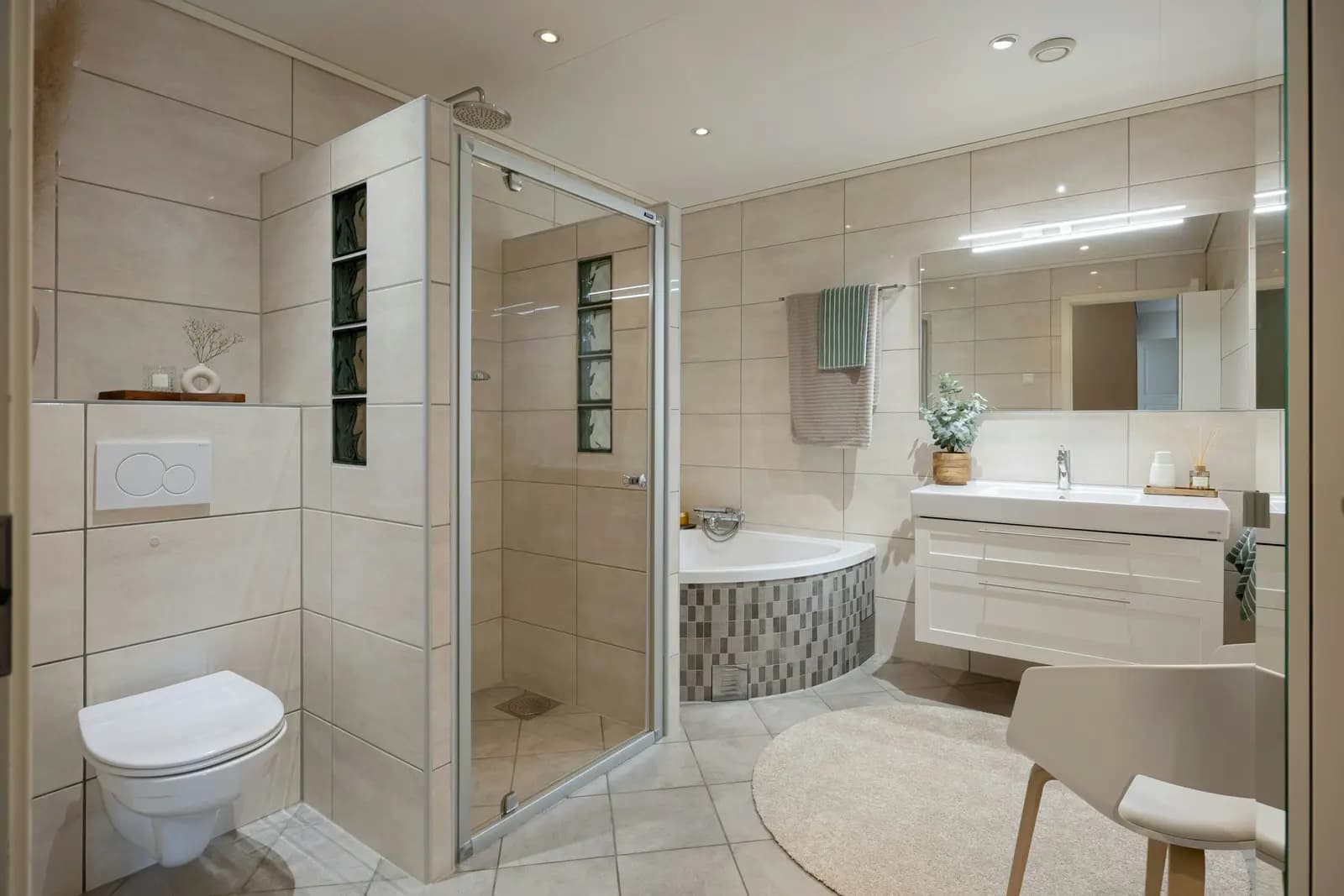
Bathrooms. A refit commonly covers removing the suite, repairing walls and floors, waterproofing, tiling, fitting a bath or shower, a basin and a toilet, and adding extraction and lighting. Changing a bath for a walk-in shower is a popular job, and it brings drainage and floor-falls into play.
Wet rooms. These demand careful waterproofing. Ask what system the fitter uses and who guarantees it.
Full-room changes. Moving walls, opening up to an extension or putting a bathroom where there was a bedroom can mean structural work. If that is what you want, you may be better with a builder who handles extensions or renovations: see renovations and extensions.
The English Housing Survey 2024 to 2025 reports that 15% of dwellings (4.0 million) failed the Decent Homes Standard in 2024 (MHCLG, English Housing Survey 2024 to 2025, published 29 January 2026, read 12 October 2026). The survey does not break that down by kitchens and bathrooms, so we make no claim about those rooms. It does show that faults are common, so ask what will be done about extraction and waterproofing in a wet room.
Do you need planning permission or building regulations approval?
Planning. The Planning Portal says a planning application for installing a kitchen or bathroom is generally not required unless it is part of a house extension. If your property is listed, it advises consulting the local planning authority (Planning Portal, kitchens and bathrooms, read 12 October 2026).
Building regulations, England. The Planning Portal says work to refit a kitchen or bathroom with new units and fittings does not generally require building regulations approval, though drainage or electrical work that forms part of the refit may. If a kitchen or bathroom goes into a room where there was none, approval is likely to be required to ensure adequate ventilation and drainage, and to meet requirements for structural stability, electrical safety and fire safety (Planning Portal, building regulations for kitchens and bathrooms, read 12 October 2026).
Electrics (Part P)
Electrical safety in dwellings in England is covered by Approved Document P, the 2013 edition, which GOV.UK describes as the current one and which explains when notification of work is required (GOV.UK, Approved Document P, read 12 October 2026). We have not listed which jobs are notifiable here, because the rules are detailed and have changed. In practice, bathrooms are treated as a higher-risk area, new circuits are commonly notifiable, and many electricians register with a competent person scheme so they can self-certify the work.
Ask the fitter three things:
- Who is doing the electrics, and which competent person scheme are they registered with?
- Will you be given an electrical certificate at the end?
- If building control needs to be told, who is telling them?
Wales and Scotland have their own electrical and building rules, so do not assume the English position applies.
Drainage and ventilation
Drainage is covered by Approved Document H in England. GOV.UK shows the 2015 edition, which covers foul water drainage above and below ground (GOV.UK, Approved Document H, read 12 October 2026). For a straight swap of fittings with the same waste runs, drainage rules are rarely the issue. They become one when you move a toilet, a shower or a washing machine to a new place, or when a kitchen goes in a new room. Ventilation matters in both rooms, so ask what extraction is being fitted.
Scotland and Wales
In Scotland, building standards work through building warrants from your council. We have not found a Scottish Government statement on like-for-like refits, so ask your council's building standards team before any structural, drainage or electrical change. In Wales, building regulations are devolved, so check the Welsh Government's guidance or your council.
How long does a refit take?
It depends on the size of the room, whether walls and floors are being changed, and when the units, tiles and sanitaryware arrive. As a guide, a straight bathroom swap is often a matter of days to a couple of weeks and a full kitchen with new layout is usually longer, but we would not rely on a figure that did not come from your fitter's programme. Ask for a start date, a finish date and what happens if delivery is late. Check lead times on kitchen units and made-to-order goods before you strip out the old room.
What should you check before hiring a fitter?
| Check | What to ask for |
|---|---|
| What is included | A written list covering strip-out, plumbing, electrics, plastering, tiling, flooring, decoration, making good and waste removal |
| Who supplies what | Whether you buy the units and tiles or the fitter does, and who is responsible for damaged or missing parts |
| Trades | Which parts are done by the firm and which are subcontracted, and who the subcontractors are |
| Electrics and gas | Competent person scheme or Gas Safe registration, and the certificates when done |
| Insurance | Public liability cover and its end date |
| Examples | Two or three recent kitchen or bathroom jobs and the customers' contact details |
| Guarantee | What the workmanship guarantee covers, for how long, and who honours it |
Citizens Advice says a quote is a fixed price, so you know what you are getting and what it will cost. It advises written quotes from at least three traders, and says to ask for a trader's insurance policies and check they will not expire before the work finishes. It also advises checking whether the trader is a member of an approved trader scheme, a competent person scheme or a trade association (Citizens Advice, before you get building work done, read 12 October 2026). For the wider steps, see how to hire a builder.
Compare like with like
Kitchen quotes differ for reasons that have nothing to do with how good the fitter is. One includes the units, one does not. One allows for new electrics, another assumes the old ones will do. One includes tiling and decorating. Put the quotes side by side and mark every line that appears in one and not the others before you compare totals.
Deposits and payments
Citizens Advice says not to agree to pay everything up front and, where a deposit cannot be avoided on a long job, not to agree to more than 25%. Get a receipt. A common plan is to pay for the goods when they are delivered, and the labour in stages, with a final payment held back until you have signed off the snagging list and received the certificates.
What are the red flags?
- A price that is far below other quotes, with no explanation of what has been left out.
- A request for the whole kitchen price in cash before the units are ordered.
- No answer when you ask who does the electrics or the gas.
- A fitter who says building regulations do not matter on a bathroom.
- No written contract, no start date, no named person responsible on site.
- A mobile number and no business address.
Citizens Advice says you might be able to cancel a contract if you change your mind within 14 days. The 14 days start when you tell the trader to start work or when you sign a written contract. If you ask for work to begin within that time you may have to pay for some or all of it. Made-to-measure goods are often treated differently, so read what you are signing.
How does MyLocalBuilders rank fitters?
Our ranked list is ordered by verified-review score over the last 12 months, then by distance. Nobody pays to move up it. A paid Featured slot sits above the list and is labelled as such. Our review policy explains who can leave a review. An enquiry from you goes to one firm only. We do not check a firm's insurance, Gas Safe registration or electrical scheme membership for you, so use the table above.
Kitchen and bathroom fitters on MyLocalBuilders
Search by postcode
TrustMark registered building firm in London offering kitchens and bathrooms.

TrustMark registered building firm in London offering kitchens and bathrooms.

TrustMark registered building firm in Birmingham offering kitchens and bathrooms.

TrustMark registered building firm in Bristol offering kitchens and bathrooms.

TrustMark registered building firm in London offering extensions, loft conversions, kitchens and bathrooms, groundworks, structural work and plastering.

TrustMark registered building firm in London offering loft conversions, kitchens and bathrooms and roofing.
Questions people ask
Do I need building regulations approval to fit a new kitchen?
The Planning Portal says refitting a kitchen with new units and fittings does not generally need approval in England, but drainage or electrical work that forms part of the refit may. A kitchen in a room that never had one is likely to need it.
Does bathroom electrical work need to be certified?
In England Approved Document P explains when electrical work must be notified, and bathrooms are commonly treated as a higher-risk area. Ask your electrician which competent person scheme they use and for the certificate at the end.
Do I need planning permission for a new bathroom?
The Planning Portal says a planning application for installing a kitchen or bathroom is generally not required unless it is part of a house extension. If the property is listed, speak to the council first.
Who should do the gas work if I move my hob?
A Gas Safe registered engineer. You can check their registration on the Gas Safe Register before they start.
How much deposit should I pay a kitchen fitter?
Citizens Advice says not to pay everything up front and not to agree to more than 25% if a deposit is unavoidable. Always get a receipt, and ask what the deposit covers.
Can I cancel a kitchen or bathroom contract?
Citizens Advice says you might be able to cancel within 14 days of agreeing the contract or telling the trader to start, but you may owe for work already done. Made-to-measure goods are often treated differently, so read the terms.
Is a kitchen and bathroom fitter the same as a builder?
Not always. Many fitters are specialists who do fitting and tiling and bring in an electrician and plumber. For structural change or an extension, hire a builder, and ask who is responsible for each trade.
Sources
- Planning Portal: Is building regulations approval needed for work to a kitchen or bathroom?. Read on .
- Planning Portal: Kitchens and bathrooms. Read on .
- GOV.UK: Electrical safety: Approved Document P. Read on .
- GOV.UK: Drainage and waste disposal: Approved Document H. Read on .
- GOV.UK (MHCLG): English Housing Survey 2024 to 2025: headline findings on housing quality and energy efficiency. Read on .
- Citizens Advice: Before you get building work done. Read on .
General information, not legal or professional advice. Rules differ between England, Scotland, Wales and Northern Ireland, and each council applies them in its own way.
Ready to price your project?
Tell us what you need. We reply by email within 1 working day. Free, and nothing is shared without asking you.