TrustMark registered building firm in Leeds offering structural work.
TrustMark
Leeds · 4.6 miRegistered company, not yet verified

Leeds has 80 conservation areas, a stock of Victorian and Edwardian back-to-back houses, and a 14-area Article 4 Direction on student and shared housing. This page explains what those facts mean for extensions and loft conversions, how Leeds City Council handles planning and building regulations, and what to check before you hire local builders in Leeds.
Anyone hunting for builders in Leeds will find the city's housing falls into two groups: homes where the usual extension and loft rules work as you would expect, and homes where something local gets in the way. The second group is bigger than many owners realise. Leeds has 80 conservation areas, a large Victorian terrace and back-to-back stock, and an Article 4 Direction that removes permitted development rights for small shared houses across 14 areas of the city. A good local builder knows which group your street is in before the first quote.
At the 2021 Census, Leeds had 341,466 households. Semi-detached houses were the largest group at 127,950 (about 37%), then terraced houses at 85,263 (about 25%), purpose-built flats at 59,601 (about 17%) and detached houses at 52,788 (about 15%) (Office for National Statistics, Census 2021 via Nomis, read 12 October 2026).
Many of those terraces are a Leeds speciality. Back-to-back houses, which share a rear wall with the house behind and so have no back garden to extend into, were built across Victorian and Edwardian Leeds. A 2019 University of York study of Harehills concluded that these houses have heritage value that national and local planning policy has never recognised (Harrison, Historic Environment: Policy and Practice, 2019). For a homeowner the point is practical. A back-to-back normally has no room for a rear extension, so owners look up (the loft) or inside (the layout), and builders who work on them regularly know what the party walls, flues and stairs tend to allow.
Prices give context rather than a quote. HM Land Registry's index put the average Leeds home at £247,695 in July 2026, with semi-detached at £271,022, terraced at £206,148 and detached at £454,505 (Land Registry, July 2026). England averaged £293,479 that month (GOV.UK, UK House Price Index summary: July 2026). These are sale prices, not building costs. We do not quote a Leeds building price, because we have not verified one from a primary source.
Leeds City Council handles both, from separate parts of its website. Planning sits under planning permission, which covers how to apply, how to find out whether you need permission, the pre-application enquiry service and the public access system for checking what neighbours have applied for. The pre-application service is optional. The council says it is meant to give an early steer on your proposal and gives an increased chance of a quicker decision on the application, and it is for single-option proposals only.
Building regulations are on the council's building regulations and approval page, covering which work needs approval, how to apply, and how to book site inspections. They are a separate approval from planning, so a project can need both. A builder should tell you at quote stage who is responsible for each application, and what happens if the inspector asks for changes midway. Our guide to planning permission for a house extension explains where the two systems meet.
The council says there are 80 conservation areas in the Leeds district, and that 55 of them have appraisals and management plans (Leeds City Council). That is far too many to cover by name here, so the council's conservation area map is the place to check your address.
What changes inside one? Leeds says permitted development rights are restricted, so planning permission is required for some works that normally would not need it. Its list includes small extensions, roof extensions including dormer windows, cladding or rendering, some chimneys and flues, and some solar panels. Demolition can also need permission, with exceptions that include buildings under 115 cubic metres and gates, walls and fences below one metre fronting a highway or two metres elsewhere. Any application must show it preserves or enhances the area's character, though the council notes this does not mean new work has to copy past styles.
The Planning Portal's national rules point the same way on designated land, which includes conservation areas. A loft conversion under permitted development is not available there, side extensions need householder permission, and the larger prior approval rear extension limits do not apply (Planning Portal, loft conversions; Planning Portal, extensions). If you are thinking about a loft conversion in Leeds and your road is in a conservation area, plan on a planning application and ask a builder whether they have drawn dormers that were approved there.
Leeds City Council has an Article 4 Direction that removes permitted development rights for converting a property to a house in multiple occupation in these areas: Adel and Wharfedale, Armley, Beeston Hill and Holbeck, Bramley and Stanningley, Burmantofts and Richmond Hill, Chapel Allerton, City and Hunslet, Gipton and Harehills, Headingley, Horsforth, Hyde Park and Woodhouse, Kirkstall, Moortown, and Roundhay and Weetwood. The council says you will need planning permission to convert a property into an HMO (Leeds City Council).
If you are an investor planning an extension to add letting bedrooms in Headingley or Hyde Park, check the use as well as the build. A loft or rear extension can be perfectly lawful as building work and still sit inside a property whose change of use needs permission. Say so when you ask for quotes.
Loft conversion in Leeds is the obvious answer for back-to-back and terrace owners who cannot go out. Planning Portal's permitted development limits cap the added roof volume at 40 cubic metres for a terraced house and 50 otherwise, and the work cannot extend beyond the existing roof slope on the side facing a highway. Flats are excluded. Ask whether the builder has handled party wall notices on terraces, because a loft with steel beams bearing on a shared wall often needs them. Our loft conversions page shows how the job usually runs.
For a house not on designated land, the Planning Portal says a single-storey rear extension can extend up to three metres for a terraced or semi-detached house and four metres for a detached one under permitted development, with a prior approval route to six and eight metres. Extension builders in Leeds working on the city's many semis will often be in this territory. See our extensions page for what a typical job involves, and note that rules differ for houses created through earlier permitted development changes of use.
Much of the newer housing around Leeds Dock and the city centre is apartment living. Permitted development for extensions does not apply to flats, so refurbishments are internal and governed by the lease. The builder you need for a flat refurbishment is a different one from the builder for a Chapel Allerton semi.
Almost certainly, if you share a wall. The GOV.UK guidance on the Party Wall etc. Act 1996 says the Act covers cutting into a party wall, removing chimney breasts from one, and digging below the foundation level of a neighbour's property. It applies in England and Wales, and it is separate from planning permission and building regulations (GOV.UK). This is general information, not legal advice. Ask your builder who serves the notices and how a dispute would be settled.
Ask any Leeds builder two questions before you sign: is my road in one of the 80 conservation areas, and is it in the HMO Article 4 area? If they cannot answer without looking it up, ask how they will find out and when.
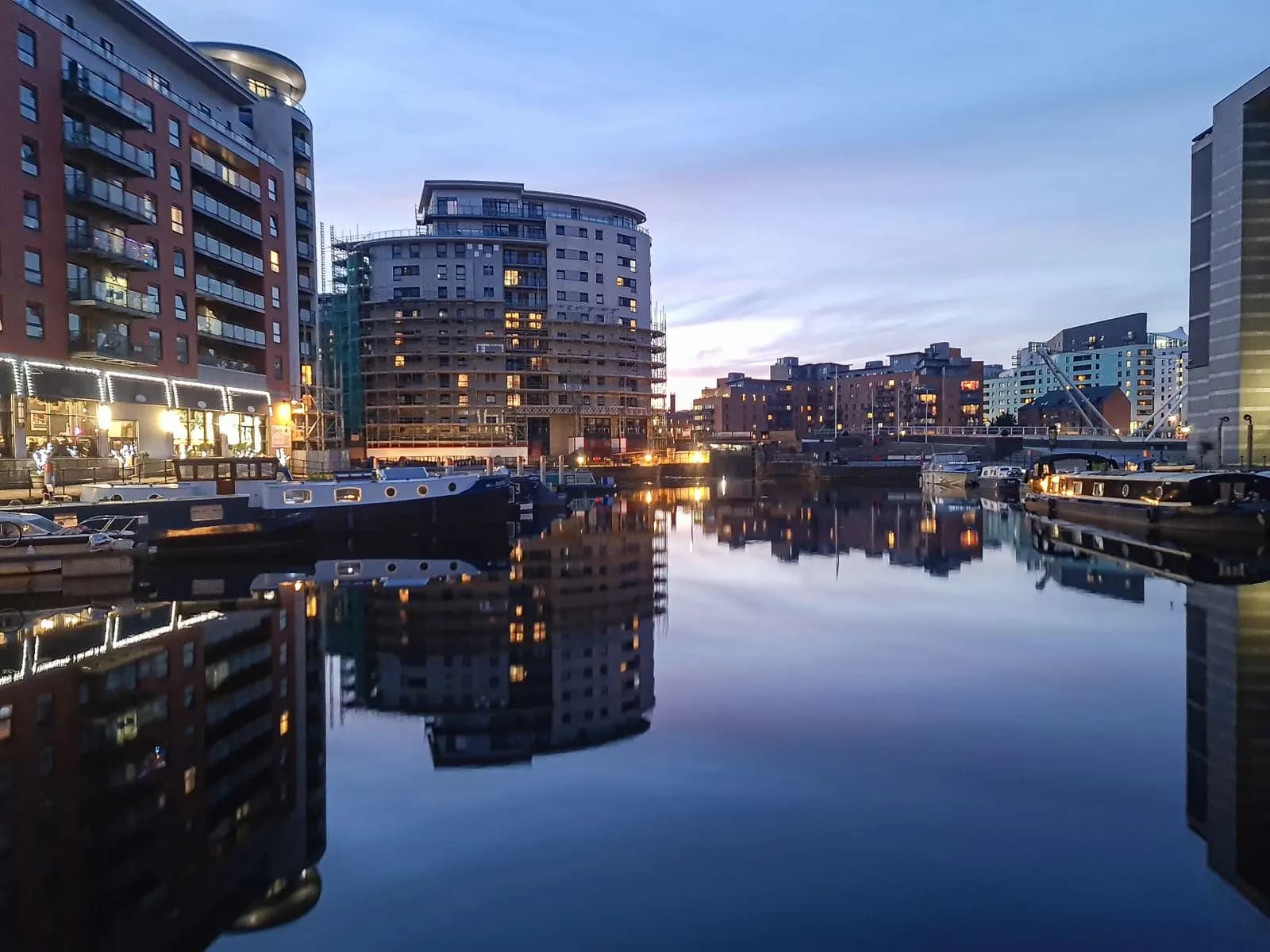
Updated . Photo at the top: Ahmad2saud on Pexels (Pexels Licence).
Often not, if your house is not on designated land such as a conservation area and stays within the Planning Portal's volume limits (40 cubic metres for a terrace, 50 otherwise). Leeds City Council says dormer windows and roof extensions can need permission in its conservation areas, so check your address first.
Leeds City Council says there are 80 in the district, and 55 of them have appraisals and management plans. Its conservation area map shows where they are.
A back-to-back shares its rear wall with the house behind, so there is normally no space for a rear extension. Owners tend to look at the loft or the internal layout instead, and either may need building regulations approval.
In the 14 areas covered by the council's Article 4 Direction, which include Headingley and Hyde Park and Woodhouse, the council says you will need planning permission to convert a property into an HMO. Check the council's map for your street.
Leeds City Council's building regulations and approval pages explain what work needs approval, how to apply and how to book site inspections. Ask your builder who submits the application.
They can. The Party Wall etc. Act 1996 covers cutting into a party wall, removing a shared chimney breast and deep digging near a neighbour's foundations in England and Wales. It is separate from planning and building regulations.
General information, not legal or professional advice. Rules differ between England, Scotland, Wales and Northern Ireland, and each council applies them in its own way.